Job Applications That Stand Out: Apply Smarter, Not Just More
When a job search is going slowly, it is tempting to send out more applications, faster. It feels productive. But a large number of identical applications often takes a lot of energy and brings little in return, and it can leave you tired and discouraged.
A better approach is to apply smarter: fewer, better-chosen and better-prepared applications, with a simple system to keep track. This guide sets out a practical way to do that.
Decide what you are looking for
Before you open a job board, write down the kind of role you want: the type of work, the level, the location or working pattern and what matters to you. A clear target makes it easier to say no to roles that are not right, and easier to explain yourself to employers.
It also helps to separate roles into three groups: a strong match, a reasonable match and a stretch. Spend most of your time on the first group.
Read the advert like a brief
Every job advert tells you what the employer is worried about and what they would like to see. Before you apply, read it slowly and note:
- The three or four most important requirements.
- The words the employer uses to describe the work.
- Anything that is essential versus anything that is only desirable.
- Any instructions about how to apply, which you should follow exactly.
Do not be put off if you do not meet every point. But be honest with yourself about the essentials.
Tailor, but keep it manageable
Tailoring does not mean rewriting everything each time. A sensible approach is to keep a strong master CV and adjust a few parts for each application.
What is worth changing
- Your profile at the top, so that it speaks to this role.
- The order of your bullet points, so the most relevant ones come first.
- Skills and keywords, where they truthfully match the advert.
- Your cover letter, which should refer to this employer and this job.
What not to change
Never invent experience or qualifications to fit an advert. If you are asked about something in an interview, you need to be able to speak about it honestly.
Do some quiet research
Spend ten or fifteen minutes learning about the organisation: what it does, who it serves and how it describes itself. This helps you write a sharper cover letter and prepare better for an interview. If you know someone who works there, a polite and brief question about the role can also be valuable, as long as you respect their time.
Make it easy for the reader
Follow the application instructions exactly, attach the right documents and use clear file names. Check that your contact details are correct and that your voicemail and email address look professional. Small, careful details tell an employer something about how you will work.
Keep track of what you send
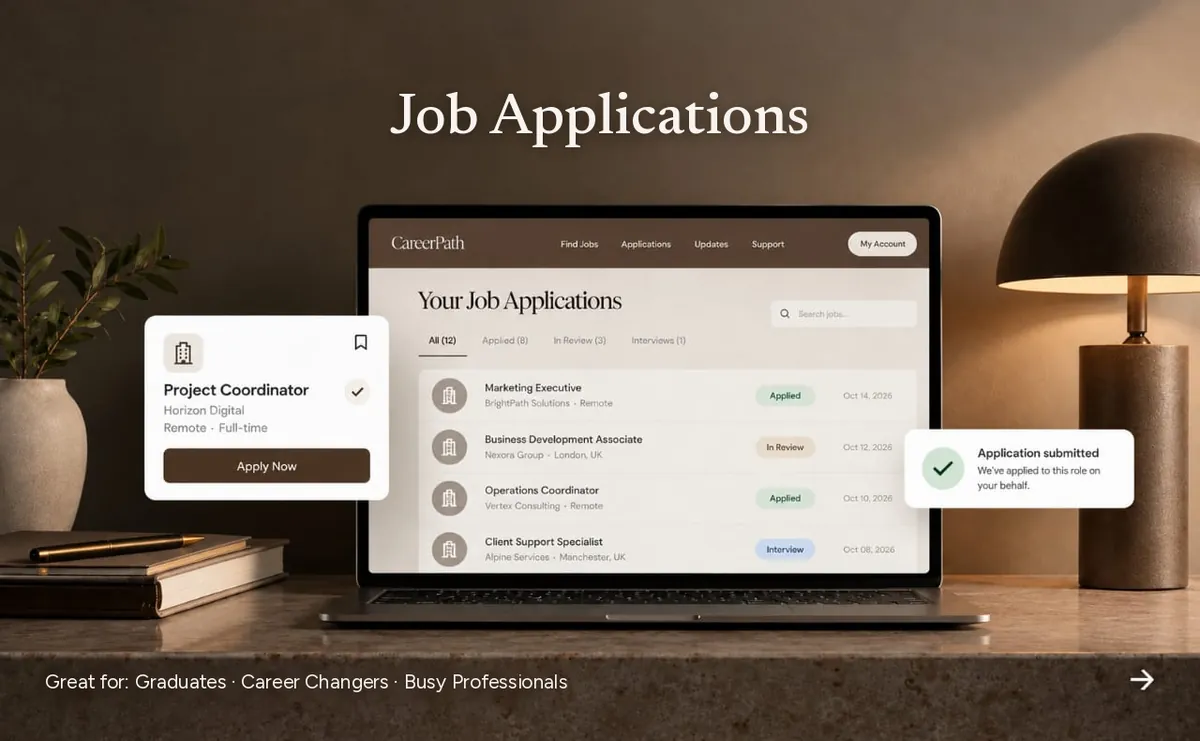
When you are applying to several places, it is easy to lose track. A simple spreadsheet or notebook is enough. For each application, note:
- The role, the organisation and the link to the advert.
- The date you applied and which version of your CV you used.
- Who you spoke to and any next steps.
- A date to follow up, if that is appropriate.
A tracker also helps you see patterns, such as which types of role get a response and which do not, so you can adjust your approach.
Follow up politely
If an advert gives a closing date or a timescale, wait until it has passed before following up. A short, courteous message to ask whether your application has been received, or about the next stage, is reasonable. Do not send repeated messages.
Look after yourself
Job searching can be tiring, and rejection is a normal part of it, even for strong candidates. Set realistic goals for each week, take breaks and celebrate the steps you can control, such as a well-prepared application sent on time. You cannot control every outcome, and nobody can honestly promise you one.
Where we can help
If you would rather not do all of this alone, our job application support can help you find suitable openings, prepare your applications and keep them organised. We work with you and use your real experience; we cannot guarantee interviews or job offers. (Placeholder: confirm what the service includes and how updates are shared.)
A strong application starts with a strong CV, so you may also like our guide to writing a CV that gets noticed. When you are ready, see how we can help.